

Almost everyone has spent time and money on temporary hair removal that doesn’t actually work long-term. Waxing keeps you trapped in a cycle of pain and regrowth every few weeks. Razors require constant maintenance. Threading lasts barely a month. Threading leaves you with irritated, sensitive skin that reacts to everything. After years of these temporary solutions, laser hair reduction sounds like the answer you’ve been waiting for. But is it really permanent? How many sessions does it actually take? Will your hair grow back? And most importantly, is it worth choosing over methods you already know?
Sarvi Luxe in Ashok Vihar specializes in laser hair reduction because it’s one of the most requested treatments. Clients come in frustrated with temporary methods and wanting a real solution. Understanding what laser hair reduction actually delivers, and what it doesn’t, helps you decide if it’s right for you.
Why Waxing and Razors Keep Failing You
Waxing pulls hair out from the root. Razors cut it at skin level. Threading snaps it. None of these methods eliminates the follicle that’s producing the hair. The hair follicle stays intact and ready to produce new hair. You’re not solving the hair problem. You’re just temporarily removing the visible hair.
Additionally, waxing causes problems over time. The repeated trauma of ripping hair out irritates skin, causes inflammation, and triggers the body’s defense response. Your skin becomes more reactive. The follicles respond to this repeated trauma by producing coarser, darker hair. Many people report that their hair comes back thicker and more noticeable after years of waxing. This isn’t your imagination. It’s the body’s physiological response to repeated follicle trauma.
Razors create an endless cycle. Hair is stubble within hours. Visible within a day. By day two or three, you’re shaving again. Over a lifetime, you’ll have shaved thousands of times. The cost and time investment add up significantly.
How Laser Hair Reduction Actually Targets the Hair Follicle
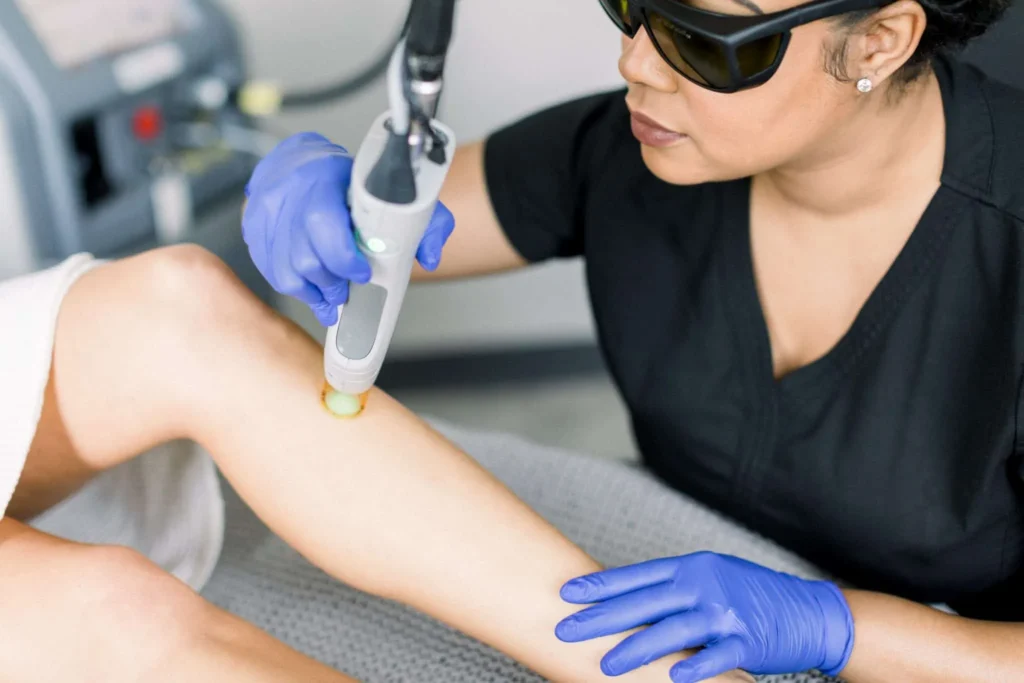
Laser targets melanin, the pigment inside the hair shaft. The laser light travels down the hair and reaches the follicle at the base. The concentrated laser energy heats the follicle cells and damages them. Over multiple sessions, the follicles are damaged to the point where they stop producing new hair effectively.
This is fundamentally different from temporary hair removal. You’re not just removing the hair. You’re damaging the structure that produces hair. This is why lasers can provide long-term hair reduction that temporary methods cannot.
Different laser wavelengths work better for different skin types. Longer wavelengths penetrate deeper and work better on darker skin. Shorter wavelengths work better on lighter skin with dark hair. The best results happen when there’s good contrast between dark hair and light skin. This is why laser works most effectively for dark hair on light skin and is less effective for fine blonde hair or white hair.
At Sarvi Luxe in Ashok Vihar, the team uses technology appropriate for the range of skin tones in Delhi’s population, ensuring effective treatment regardless of skin type.
What “Permanent Hair Reduction” Actually Means
The FDA uses the term “permanent hair reduction” rather than “permanent hair removal” for laser treatment. This is technically accurate. Most people achieve 80 to 90 percent hair reduction after a full course of treatment. Some hair might regrow, usually finer and lighter than the original hair.
True permanent removal of every single hair is rare. But permanent reduction, where the vast majority of hair is gone and regrowth is minimal, is what most people achieve. For practical purposes, this feels like permanent hair removal. You’re not dealing with noticeable hair regrowth years after treatment.
Some people do experience some hair regrowth over the years, particularly if hormones change or sun exposure is significant. But the regrowth is typically much lighter and finer than the original hair. Maintenance sessions every couple of years can keep hair suppressed if regrowth occurs.
The Timeline for Laser Hair Reduction Results
Hair grows in cycles. At any given time, some hairs are actively growing while others are resting. The laser can only damage follicles that are actively growing during your appointment. This is why multiple sessions are needed. You need to catch the different hair growth cycles.
Most people need 6 to 8 sessions for significant hair reduction, sometimes more depending on hair thickness and skin type. Sessions are spaced 4 to 6 weeks apart, aligning with the hair growth cycle. You start seeing results within 2 to 3 sessions, with visible reduction becoming apparent by session 4 or 5. Significant reduction usually takes the full course.
After the full course, ongoing maintenance might involve a session yearly or every couple of years, depending on how much regrowth occurs. For most people, this is far less frequent than the waxing or shaving schedule they were on before.
Why Consistency Matters and Skipping Sessions Sets You Back
If you skip a session or wait too long between appointments, you reset the progress. The hair cycles that would have been treated in that session are now resting and will need to be treated next time. Missing sessions extends the timeline to achieve your goal. Consistency is key to efficient progression through treatment.
Laser Hair Reduction on Different Body Areas
Body hair on legs and underarms is coarser and responds quickly to laser. Results are visible early in the treatment course. Facial hair requires more sessions and more conservative settings because facial skin is more delicate. Fine body hair, like on arms, takes longer to show results. The hair density and texture in different areas affect how quickly you see results.
At Sarvi Luxe in Ashok Vihar, the team customizes the approach for different body areas, using appropriate settings that balance effectiveness with safety.
Aftercare and What to Expect During Treatment
During laser treatment, most people describe a warm snapping sensation. It’s not painless, but it’s manageable. Numbing cream is available if you’re sensitive. After treatment, expect mild redness that usually resolves within hours to a day. Mild swelling is normal. You can return to regular activities immediately.
Aftercare involves avoiding sun exposure, avoiding hot showers and exercise for 24 to 48 hours, and avoiding touching or picking at any irritation. Using gentle skincare products helps. Most people tolerate treatment very well without significant downtime.
Hair Reduction and Skin Tone Considerations
Modern laser technology has improved significantly for treating darker skin tones. Longer-wavelength lasers work better on darker skin. At Sarvi Luxe, the technology and technique are adjusted for safe and effective treatment across different skin tones. Discussing your skin type during consultation ensures appropriate settings are used.
Combining Laser Hair Reduction with Other Treatments
Patients treating areas with post-hair-removal pigmentation sometimes add a skin-brightening treatment to even out tone between sessions.
After completing laser hair reduction, your skin often looks significantly better. The constant irritation from waxing or razors stops. Skin tone evens out. Texture improves. Some people combine laser hair reduction with skin-brightening treatment or skin rejuvenation to address other skin concerns simultaneously.
Conclusion
Laser hair reduction in Ashok Vihar finally delivers on the promise of long-term hair reduction that temporary methods cannot. Whether it’s worth choosing over methods you’ve been using depends on whether you value freedom from constant hair removal maintenance and are willing to commit to the treatment course.
Frequently Asked Questions
Is laser hair reduction painful?
Most people describe a laser as a mild snapping sensation. Numbing cream is available if you’re sensitive. Pain tolerance varies, but most people tolerate treatment easily without anesthesia.
Can I get laser hair reduction if I have dark skin?
Yes. Modern laser technology is effective on a range of skin tones. The wavelength and settings are adjusted appropriately. At Sarvi Luxe in Ashok Vihar, the team has experience treating diverse skin types safely and effectively.
What happens if I skip a laser hair reduction session?
Skipping sessions extends your treatment timeline because the hair cycles you would have treated are now resting. Consistency is more important than frequency. If you miss a session, just continue with the next one.
Will my hair grow back after laser hair reduction?
Most people experience a permanent reduction of 80 to 90 percent of hair. Some hair might regrow over the years, usually much finer and lighter. Most people find the results functionally permanent, not needing the frequent removal they did before.
CTA