Hair loss is frustrating enough when you’re experiencing it. But when you start researching solutions, the terminology becomes confusing. PRP, GFC, exosomes, growth factors, platelet-rich plasma, growth factor concentrate. These are all treatments that purport to help with hair growth, but understanding what each actually does and how they differ helps you decide which might be right for your situation. PRP, or platelet-rich plasma, is the most established of these options with the longest clinical track record. Understanding how it works and what results to expect helps you make an informed decision.
Sarvi Luxe in Ashok Vihar offers PRP hair therapy as one of several hair treatment options. Your own blood contains substances that can naturally stimulate hair follicles. Understanding how this works helps you appreciate why PRP is more than just hype.
What Platelets Actually Contain
Platelets are tiny blood cells responsible for clotting. They also contain dozens of growth factors and other signaling molecules. These molecules tell cells what to do: repair themselves, grow, reduce inflammation, stimulate new cells, and perform many other functions.
When blood is processed to concentrate platelets and remove other components, you get platelet-rich plasma, or PRP. The concentrated growth factors in this plasma can directly stimulate hair follicles when injected into the scalp where hair loss is occurring.
How PRP Stimulates Hair Growth
When PRP is injected into areas where hair follicles are thinning or non-responsive, the growth factors in the platelets signal the follicles to restart the growth cycle. Dormant follicles become activated. Miniaturized follicles that have shrunk start producing thicker hair. Inflammation around the follicles decreases. The overall environment of the scalp improves.
The mechanism is straightforward: you’re providing the biological signals that hair follicles need to function optimally.
What to Expect During PRP Hair Treatment
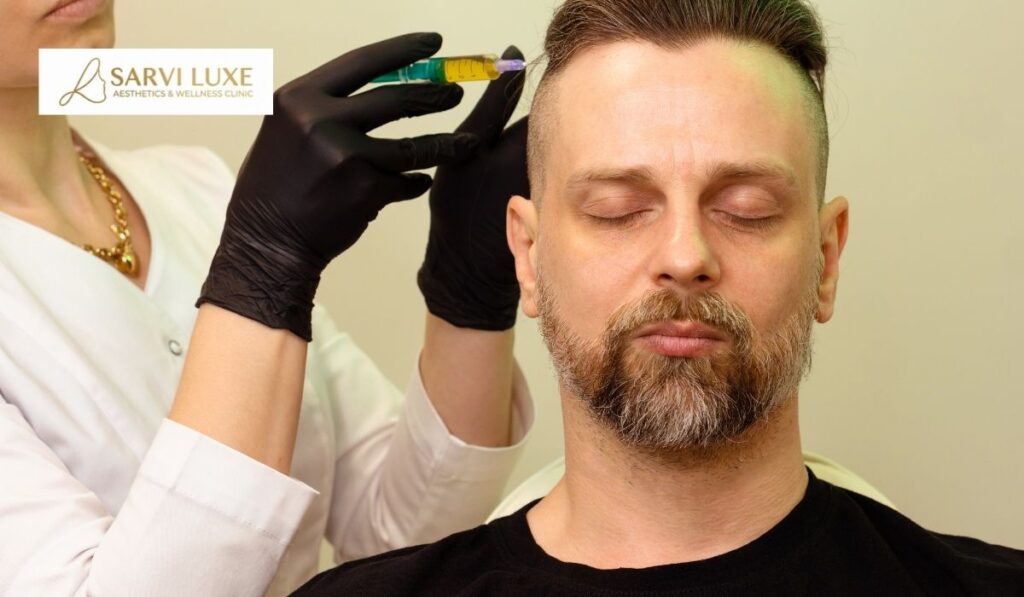
PRP treatment starts with a blood draw, similar to any blood test. The blood is processed in a centrifuge that separates the platelets from other blood components, concentrating them. The resulting platelet-rich plasma is then injected directly into the scalp where hair loss is occurring.
The procedure takes about 30 to 45 minutes total. The injection process might cause mild discomfort, but most people tolerate it easily. You can return to normal activities immediately. Hair washing and normal scalp care can resume after a day.
Timeline for PRP Hair Results
Results from PRP therapy are not immediate. You’re stimulating biological processes that take time. Some people notice reduced hair shedding within a few weeks. New hair growth typically becomes visible over 3 to 6 months. By 6 months, measurable improvement is usually visible.
Individual variation is significant. Some people respond very well and see results relatively quickly. Others respond more gradually. Factors affecting response include how advanced the hair loss is, how responsive the follicles are, age, genetics, and overall health.
Number of PRP Treatments Needed
Most people need a series of PRP treatments for the best results. Initial treatment protocols usually involve 3 to 4 treatments spaced 4 to 6 weeks apart. After the initial series, maintenance treatments are done every 6 to 12 months to sustain and continue improving results.
How PRP Compares to Topical Treatments
Topical treatments like minoxidil work on the scalp surface. They can slow hair loss and stimulate some regrowth. PRP works at the follicle level, providing biological signals that trigger a more comprehensive response.
The advantage of PRP is a more direct action on follicles. The advantage of topical treatments is that they’re cheaper and don’t require injections. Some people use both together for complementary effects.
How PRP Compares to Oral Medications
Oral medications like finasteride work by blocking DHT, a hormone that shrinks sensitive follicles. They prevent continued miniaturization and hair loss but don’t stimulate regrowth directly. PRP stimulates existing follicles directly but doesn’t affect DHT production.
Some people combine oral medications with PRP for complementary effects: the medication prevents further loss while PRP stimulates regrowth.
Who Responds Best to PRP Hair Treatment
PRP works best for people with early to moderate hair loss where follicles are still responsive but not producing hair well. Someone with complete baldness in an area where no hairs grow at all might not see follicle regeneration with PRP alone because the follicles have shut down completely.
People with a genetic hair loss pattern respond well when caught relatively early. People with hair loss from other causes, like nutritional deficiency or stress-related shedding, often respond very well.
Age matters somewhat. Younger people with early loss often respond better than very elderly people with advanced loss, though people of any age can benefit.
Combining PRP with Other Hair Treatments
Some patients alternate PRP sessions with GFC therapy over the course of their treatment plan to combine the benefits of both approaches.
PRP often works well combined with GFC therapy or hair exosome treatment because they work through different mechanisms and can be complementary. Some people combine PRP with scalp detox to optimize the scalp environment for growth. Others combine with topical treatments for a comprehensive approach.
At Sarvi Luxe in Ashok Vihar, the team discusses whether combining treatments would be beneficial for your specific situation.
Cost and Duration of Results
PRP treatment costs more upfront than topical treatments but is less expensive than some other advanced therapies. Results last for 6 to 12 months, requiring maintenance treatments to sustain improvement.
The cost versus benefit depends on how much hair loss you’re experiencing and how you value the potential for hair regrowth compared to other options.
Why Use Your Own Blood Instead of Synthetic Growth Factors
Using your own blood is advantageous because your body recognizes it and processes it safely. There’s no immune rejection. The growth factors are in a biologically compatible format. Additionally, using your own blood avoids the cost and regulatory complexity of synthesized growth factors.
Conclusion
PRP hair treatment in Ashok Vihar uses your body’s own growth factors to stimulate hair follicles and restore hair growth. It’s a well-established treatment with clinical data supporting its effectiveness.
Frequently Asked Questions
Is PRP hair treatment painful?
The treatment involves injections into the scalp. Most discomfort is minimal. Some people find it slightly uncomfortable. Numbing cream can be applied if you’re sensitive. Most people tolerate treatment easily.
How long does PRP treatment take?
The entire appointment takes 30 to 45 minutes. Blood draw, processing, and injection are all included. You’re back to normal activities the same day.
Can women get PRP hair treatment?
Absolutely. Women experience hair loss for various reasons, including genetics, hormones, stress, and nutritional factors. PRP can help women as well as men.
When will I see results from PRP?
Results are gradual. Some people notice reduced shedding within weeks. Visible new hair growth typically takes 3 to 6 months. Continued improvement often happens over 6 to 12 months.
CTA